aside test asdasd

Posted on by Noel | Leave a comment

“It’s what they don’t say” a choreography video trailer.

I am performing in a choreographed piece by Marina Smoulevits at the Ultimate dART Dartington Ma show. “It’s what they don’t say,” utilizes two human sized piles of clothes to explore, through movement, the complexities and banalities of a relationship between two individuals.

Marina writes,

A duet performance.

A man A woman
A mountain A struggle
A dance A smile A skirt Around
A life Two lives
A mirror A sound
A route Two routes
Side by side, Hand in hand, Shoulder to shoulder
Together
Oneself

A shirt A jacket A coat
A burden A worry A drop
A loss A gain A game
Your jacket my shirt

Becoming fully aware of

Together
Oneself

A woman A man

It’s whAt they don’t sAy

I am very excited about this piece. We have been rehearsing rather regularly for about six months now. It’s given me the time and space to think about the role of improvisation, structure and movement and how these aspects relate to painting. Movement and performance have been the unexpected yet fertile areas of study this year at Dartington, especially in considering it in social/environmental contexts.

Posted in In Progress, Ultimate dART, Videos | Leave a comment

Leisure, Leftover: A painting in progress

aller-park-swimming-pool

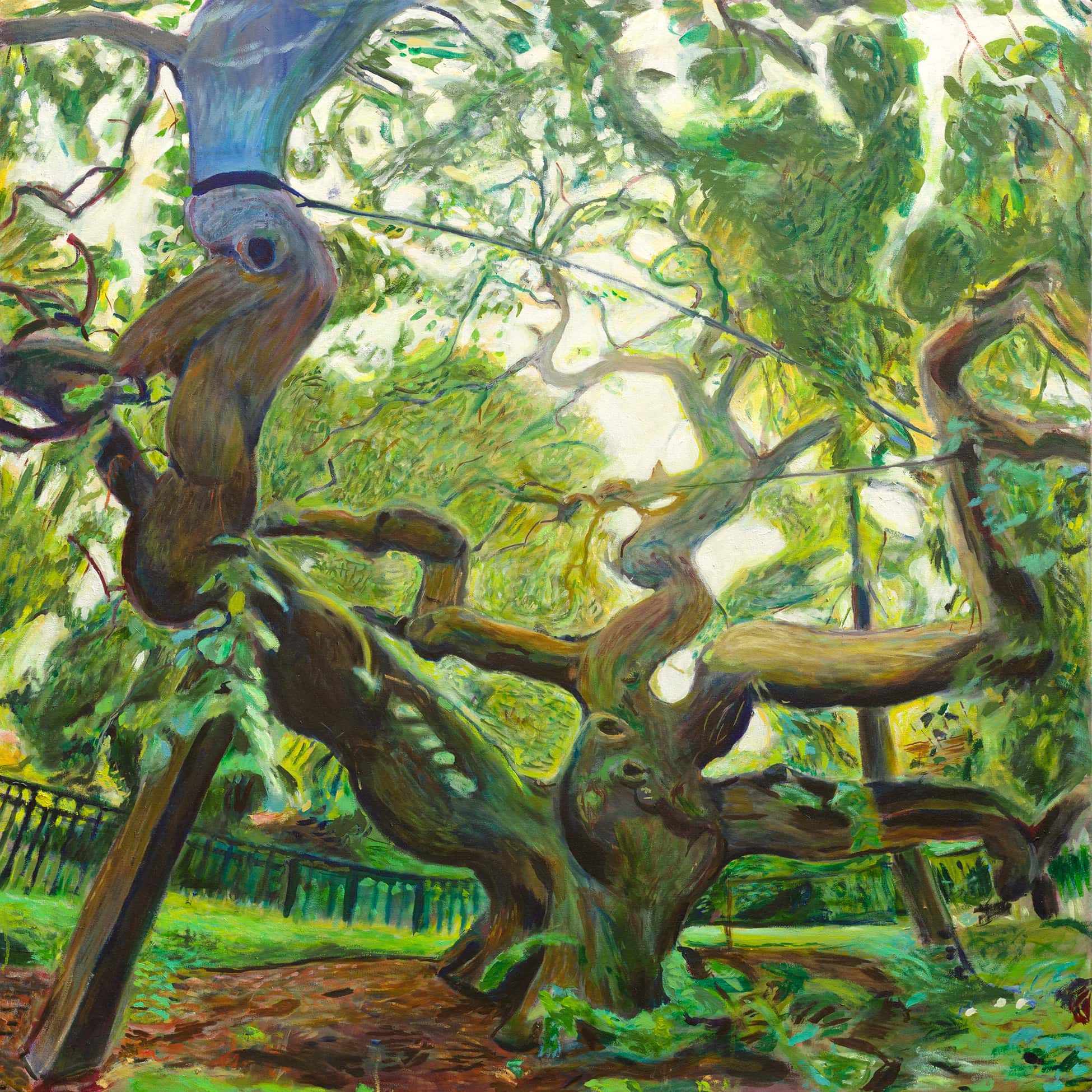
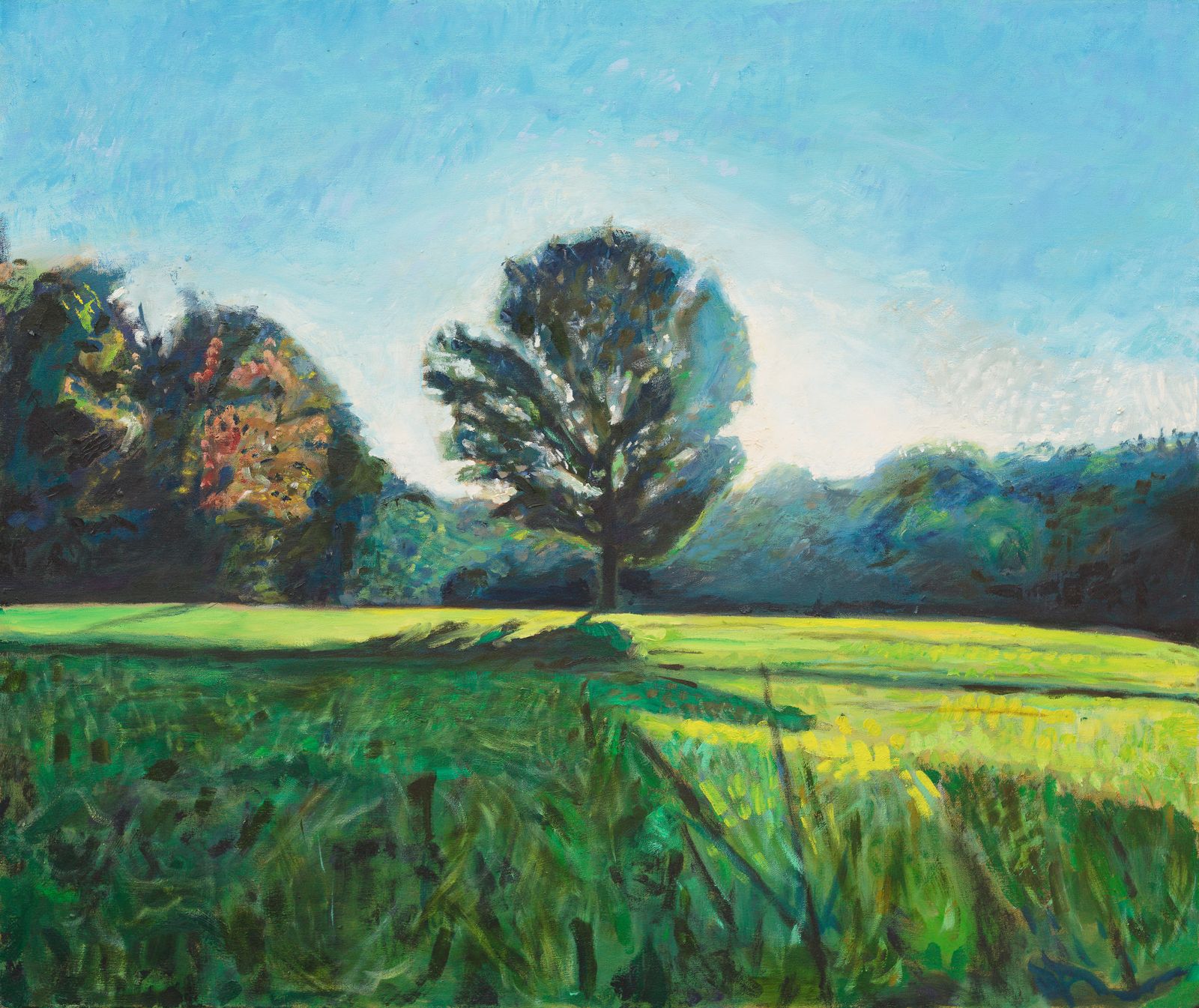
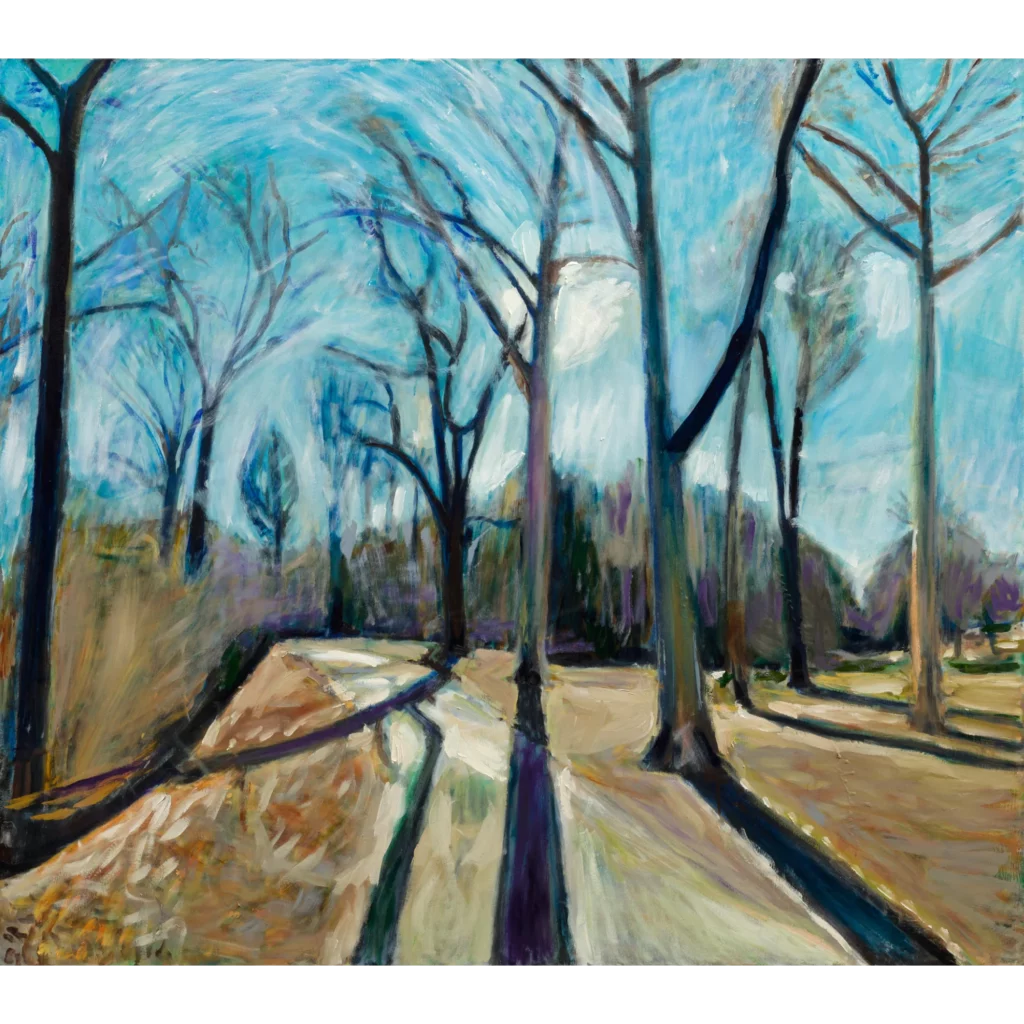
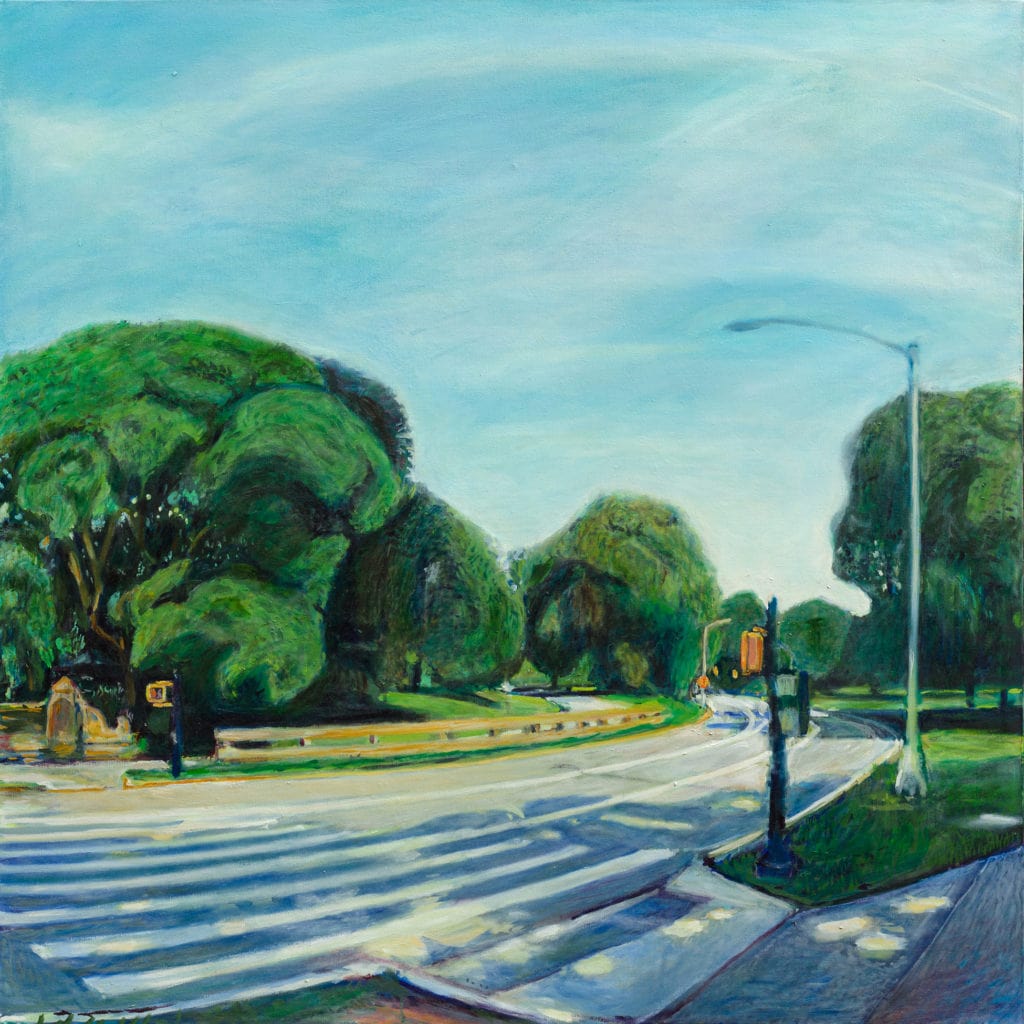
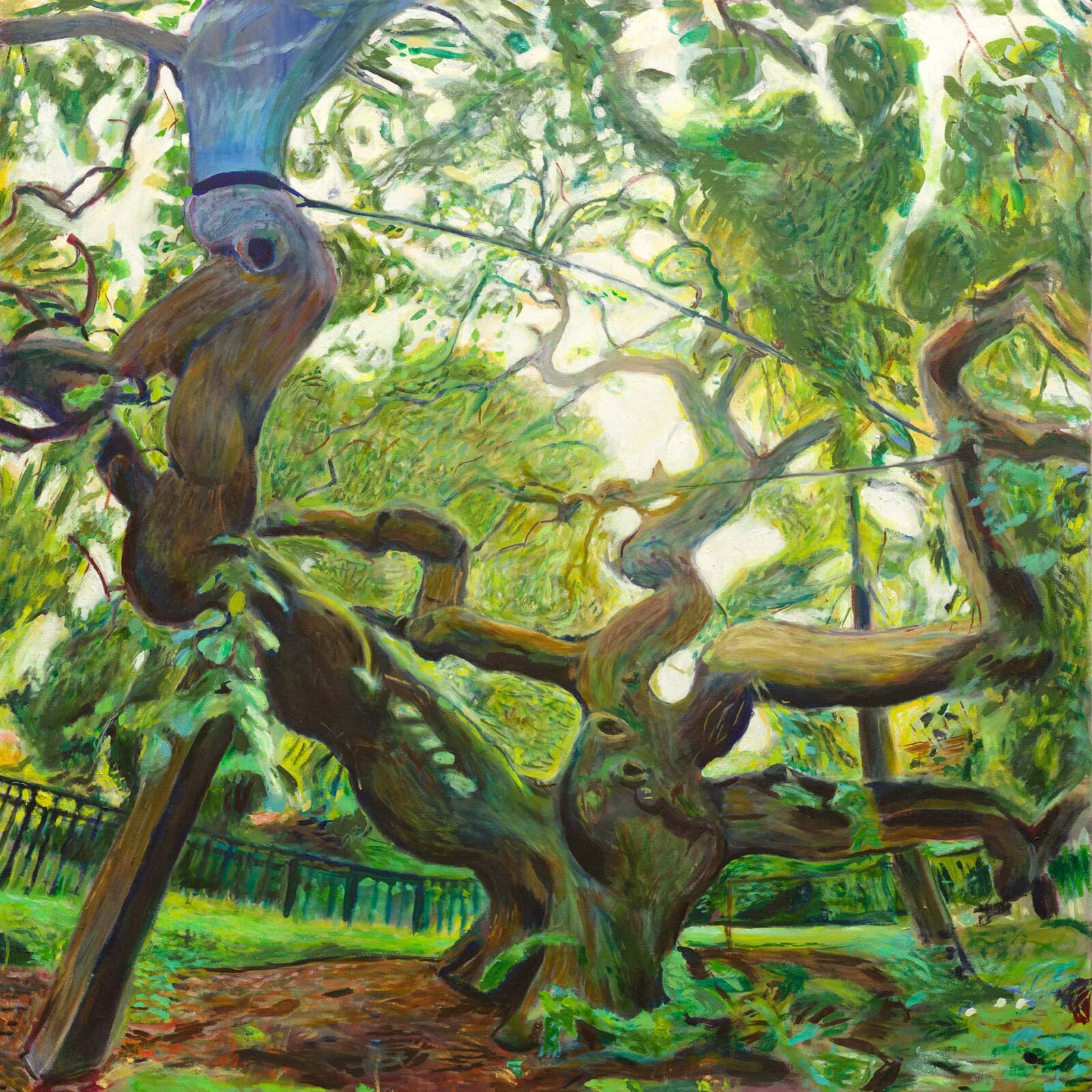
This photo is from the end of April.  As part of my Ultimate dART exhibit this July, I’ve continued to paint 4 foot square canvases of places I find in and around Totnes.  I will post occasional progress photos when I can. I am planning to exhibit 11 of these canvases, with sounds recorded from the sites depicted playing from small speakers behind the paintings.

Aller Park is a location on the Dartington Estate that was originally used by the Dartington Hall School and has not been used for the past 10 years, apparently because of an asbestos problem in the building.  The pool is in close proximity and has been the site of some interesting projects. Such sites are fascinating to me. The pool is obviously no longer a pool, but it isn’t important or valuable enough to transition into something else. Will Dartington Trust repair the pool?  or will they bury it?

Dartington Estate is transition rapidly, and is not without controversy. Dartington College of Arts is closing—”moving” to University College Falmouth this summer, but, it has become clear that you cannot “move” a college.  It is a closing. A particular land use ends.  What value systems inform the new land use?

Posted in In Progress | Tagged , | Leave a comment

Representation of Space in Space

I’ve been reading Edward Soja’s Thirdspace (1996) and Postmodern Geographies (1989) and Perceptions of the Environment (2000) by Tim Ingold.

“Space hides consequence from us now.”  (Berger in Soja 1989 p.22)

Space does hide consequence from those who have power..  We throw out rubbish and it goes ‘somewhere.’  We use electricity that comes from ‘somewhere.’  Our food in the super-markets comes from ‘somewhere.’  The western life-style and model of consumption is propped up on patterns that have real world spatial consequences that we do not typically see.  Many people live with these consequences and learn to find opportunity, however slim.

“…social relations become real and concrete, a part of our lived social existence, only when they are spatially “inscribed” –that is, concretely represented–in the social production of social space.”    ( Soja 1996  p46)

My experience in Pittsburgh and Philadelphia was largely influenced by a post-industrial condition. It could be argued that the factories first stood a consequence of a particular mode of production. But then the ruins of the old factories seem to become more complicated. Ambivalence about the future of the space prevails,  an absence of belief in industry for the community takes hold as the factories somehow seem to become symbols of extraction instead of production. The structures atrophy as space hides the consequences of a globalized industrial world elsewhere.

“By the same token, it is also man developing into nature.  Or in other words, human actions in the environment are better seen as incorporative than inscriptive, in the sense they are built or enfolded into the forms of the landscape and its living inhabitants by way of their own processes of growth.” (Ingold p. 87)

Dartmoor In Totnes, I find that this process of incorporating social relations into the landscape is on a larger time scale. Eventually ruins become the new norm. Before last fall, I was incredibly short sighted. The history of the US in the landscape is a few hundred years at best. Here in South Devon, the area is deemed an Area_of_Outstanding_Natural_Beauty, which has been confusing to say the least. Culturally, it is considered natural, but many forests can be plantations, many fields are enclosed and grazed. Even Dartmoor, the neighboring national park has a longstanding history of military use.

Posted in Journal | Tagged , | Leave a comment